

Bu Yazımızda Neler Var:
Quick Summary
Ethereum is a blockchain ecosystem designed for smart contracts and dApps; its native asset, ETH, functions like the network’s “fuel.” The network ensures transaction security through validators, and transaction/application usage is charged via a “gas” cost. The price of ETH is influenced not only by supply and demand, but also by network usage, fees, staking dynamics, macroeconomic conditions, and regulation.
Note: This content is not investment advice. Its purpose is to provide a clear and concise answer to the questions “What is Ethereum, how does it work, and what is it used for?”
What Is Ethereum?
Ethereum is a blockchain platform that is not limited to simple “value transfer.” It is programmable, allowing applications to run directly on the blockchain. On this platform, developers can write automatically executing rules via smart contracts and make the resulting applications (dApps) available to users.
ETH is the core crypto asset of this ecosystem. It is used to pay transaction fees, provide collateral or liquidity in certain applications, and play a role in mechanisms that contribute to network security.
What Is Ethereum? How Does Ethereum Work?
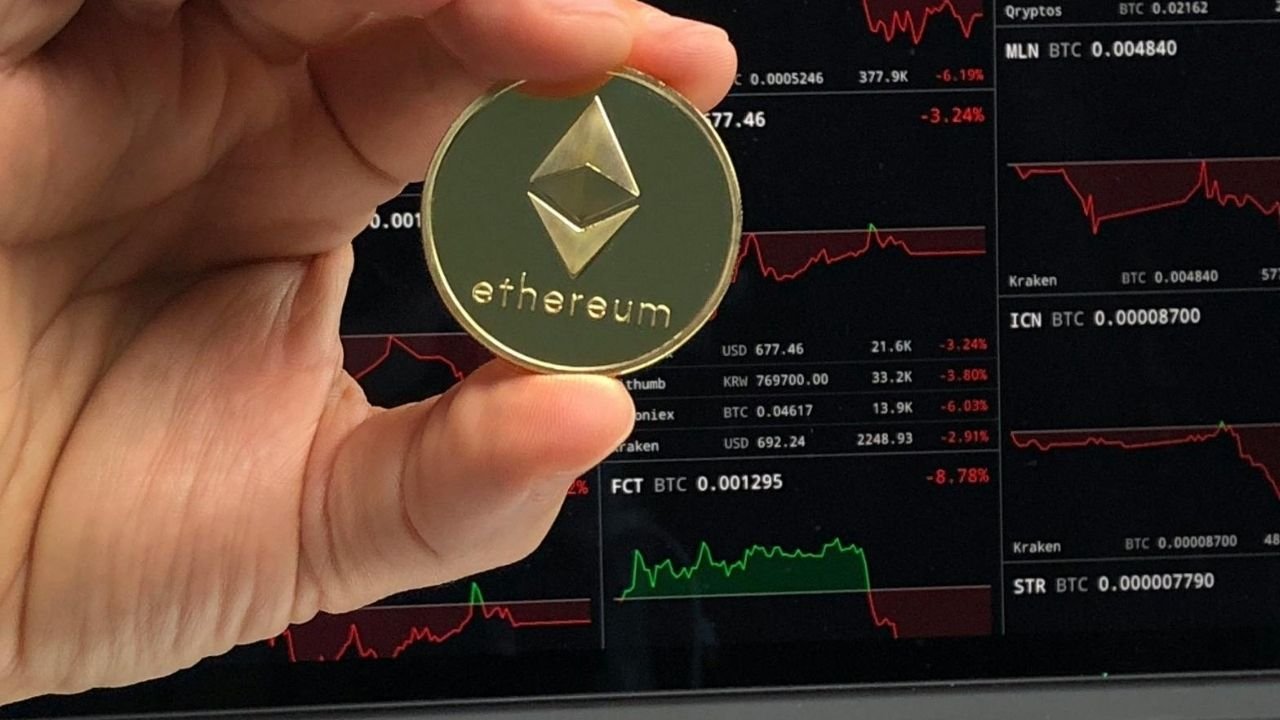
Transactions on Ethereum are written into blocks, and these blocks are linked together in a chain. Applications running on the network are powered by smart contracts, which automatically execute when predefined conditions are met (for example, releasing a payment only once certain criteria are satisfied). When users perform a transaction or interact with a dApp, the required computational cost is measured as “gas,” and gas fees are paid in ETH.
Network security is maintained by participants who validate transactions. In modern Ethereum architecture, validators take part in block production and confirmation processes to preserve the integrity of the network. The core goal is to enable transaction validation and application execution without reliance on a central authority.
What happens in practice? When buying an NFT, swapping assets in DeFi, or sending an on-chain transfer, you are effectively executing a smart contract and paying gas in return.
What Is Ethereum? Differences Between ETH and Bitcoin
| Criteria | Ethereum (ETH) | Bitcoin (BTC) |
|---|---|---|
| Main purpose | Smart contracts and dApp ecosystem (DeFi, NFT, gaming, DAO, etc.) | Primarily store of value / value transfer |
| Programmability | Extensive smart contract infrastructure | More limited scripting structure |
| Fee model | Gas fees vary by transaction type | Fees depend on network congestion |
| Use cases | DeFi lending/borrowing, exchanges, NFTs, token issuance, enterprise use cases | Transfers, storage, some payment scenarios |
In short: Bitcoin follows a simpler approach focused on “digital scarcity and transfer,” while Ethereum targets a broader range of use cases centered on “running applications on the blockchain.”
What Is Ethereum Used For?
The value of Ethereum does not rely on a single feature, but on the utility generated by its ecosystem. Today, the Ethereum network supports numerous use cases such as decentralized exchanges (DEX), lending and borrowing (DeFi), digital collectibles (NFTs), gaming economies, DAOs, and token-based projects.
- Smart contracts: Automatic rule execution without intermediaries.
- Token infrastructure: Enables projects to issue their own digital assets.
- DeFi: Transparent, programmable financial transactions on-chain.
- NFTs and digital ownership: Verification of ownership for digital assets.
- Enterprise and infrastructure use: Blockchain-based process automation and data integrity solutions.
What Is Ethereum? Factors That Affect the Price of ETH
While ETH prices are influenced by overall crypto market volatility, Ethereum also has its own unique dynamics. Key factors affecting price include:
- Network usage and demand: Increased DeFi, NFT, and application activity can affect ETH demand.
- Transaction fees (gas): Network congestion influences cost perception and user behavior.
- Staking and supply dynamics: The amount of ETH locked in staking and yield mechanisms affects circulating supply perception.
- Macroeconomic conditions: Interest rates, liquidity, and risk appetite also impact crypto assets.
- Regulation and news flow: Exchange access, taxation, and institutional adoption can drive volatility.
- Technical outlook and market psychology: Support/resistance levels, volume, and trend perception can affect short-term movements.
How to Track ETH Charts and Market Data
Live ETH/USD charts, volume data, and historical metrics are available on market data platforms, along with news and analysis feeds on crypto-focused websites.
How and Where to Buy Ethereum
Ethereum (ETH) is typically purchased through cryptocurrency exchanges. The general process involves opening an account, completing identity verification if required, depositing funds, and buying ETH via trading pairs such as ETH/TRY or ETH/USDT.
- Platform selection: Compare security history, liquidity, fees, and customer support.
- Account security: Enable 2FA and use strong passwords.
- Buying: Use market orders (instant) or limit orders (target price).
- Storage (wallet): Exchange wallets for short-term holding; personal wallets for long-term storage.
EEAT note: When evaluating “where to buy,” the most critical factors are regulatory compliance, reserve/liquidity structure, security measures, and user complaint records.
What Is Ethereum? ETH Outlook (2025–2026)
Rather than making definitive price predictions for 2025–2026, a more realistic approach is scenario-based analysis. ETH movements depend on multiple layers: technology (scalability, UX, fees), ecosystem growth (DeFi, stablecoin usage, institutional integration), and macro conditions (risk appetite, regulation).
| Scenario | What triggers it? | Possible impact on ETH |
|---|---|---|
| Positive | Increased network usage, growth of L2 ecosystem, accelerating institutional adoption | Supportive outlook driven by demand and ecosystem confidence |
| Neutral | Steady growth with periodic volatility | Cyclical price/activity behavior, more sensitive to macro trends |
| Challenging | Tight regulation, liquidity contraction, declining risk appetite | Higher volatility, slower user and capital inflows |
Therefore, the most effective approach when discussing Ethereum’s future is to jointly monitor on-chain activity, developer ecosystem strength, product adoption, and market data. Live ETH/USD pairs on market platforms can support this analysis.
Is Ethereum Reliable?
As one of the most widely used blockchains globally, Ethereum has an extensive real-world testing history in terms of infrastructure security. However, “reliability” is multi-layered: the network itself, the wallet you use, the smart contracts you interact with, and the platform you trade on all carry separate risks.
- Network risk: Protocol upgrades or potential technical issues (generally low probability, high impact).
- Smart contract risk: Code vulnerabilities in dApps may lead to fund losses.
- Platform/exchange risk: Operational issues, access restrictions, fraud, or insolvency.
- User error: Wrong address, phishing links, or sharing seed phrases can cause irreversible losses.
Security checklist: Hardware wallet + 2FA + official link verification + small test transfer (especially for first-time use).
Frequently Asked Questions About Ethereum
Are Ethereum (ETH) and the Ethereum network the same thing?
No. The Ethereum network refers to the blockchain infrastructure, while ETH is the native asset of the network. ETH is primarily used to pay gas fees and enable network interactions.
What is the Ethereum “gas” fee?
Gas represents the computational cost of executing a transaction or smart contract on Ethereum. Gas fees can increase during periods of high network congestion, and simple transfers cost less gas than complex DeFi transactions.
How can I check today’s Ethereum price?
ETH prices can be tracked live on exchanges and market data platforms through ETH/USD charts and general crypto overview pages, including volume and historical data.
What is the most fundamental difference between Ethereum and Bitcoin?
Bitcoin focuses on value transfer and store of value, while Ethereum is positioned as a programmable blockchain platform for smart contracts and dApps.
What should be monitored most closely for Ethereum’s future in 2025–2026?
Beyond price, it is essential to track network usage trends, ecosystem growth, and broader market data together. Live charts and data dashboards make this easier.
Short reminder: Crypto assets are highly volatile. Before trading, define your risk profile and only invest amounts you can afford to lose.